






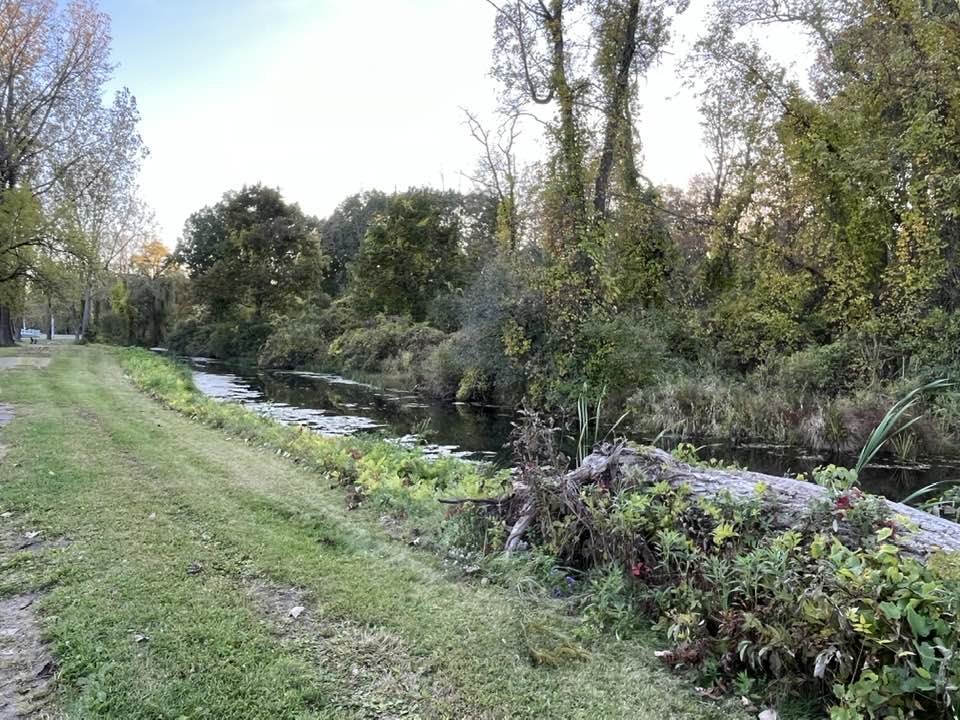
It’s a typical fall Friday evening in the upstate New York town of Fort Edward. Children are playing soccer under the lights. People are walking dogs as dusk settles over Mullen Park, a stone’s throw from the Hudson River. Here, a quiet, woodsy section of trail takes cyclists and hikers past a small, still pond and along the towpath of the Old Champlain Canal.
“When we were kids, this is where we spent our summers,” says Shannon Gillis while driving past Mullen Park, which hosts a popular summer recreation program. “It was awesome,” recalls Jessica Donnelly, Gillis’ sister, from the passenger seat. “It was the best program.”
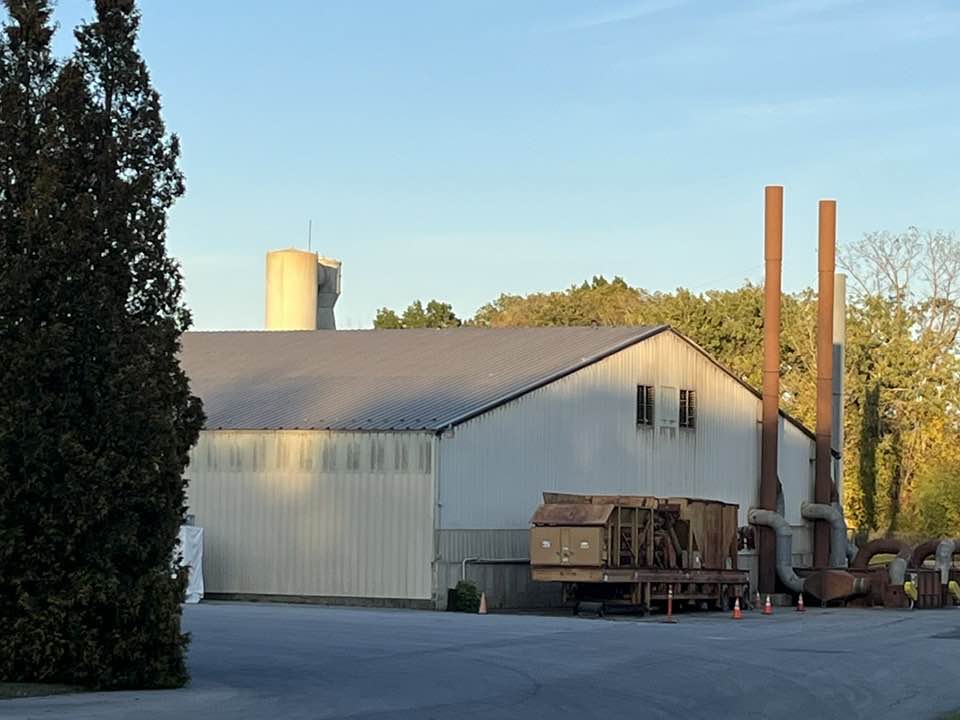
Gillis, 43, pulls over, and she and Donnelly, 45, both get out of the car. But they aren’t here to admire the scenery. Instead, they direct their attention to the Fort Edward Industrial Park, where a low-slung, pale-yellow building sits, occupied by an industrial waste management company called Clean Earth. They talk about its close proximity to community hangouts and other local spots—to Mullen Park, the Empire State Trail, downtown Fort Edward, public schools, their homes.
The sisters have lived in this rural pocket in the foothills of the Adirondack Mountains near the Vermont border their entire lives. They grew up in Fort Edward, in the house their parents still call home, and reside on the same street in the neighboring town Hudson Falls. Both Gillis and Donnelly teach science, at the middle school and high school levels respectively.
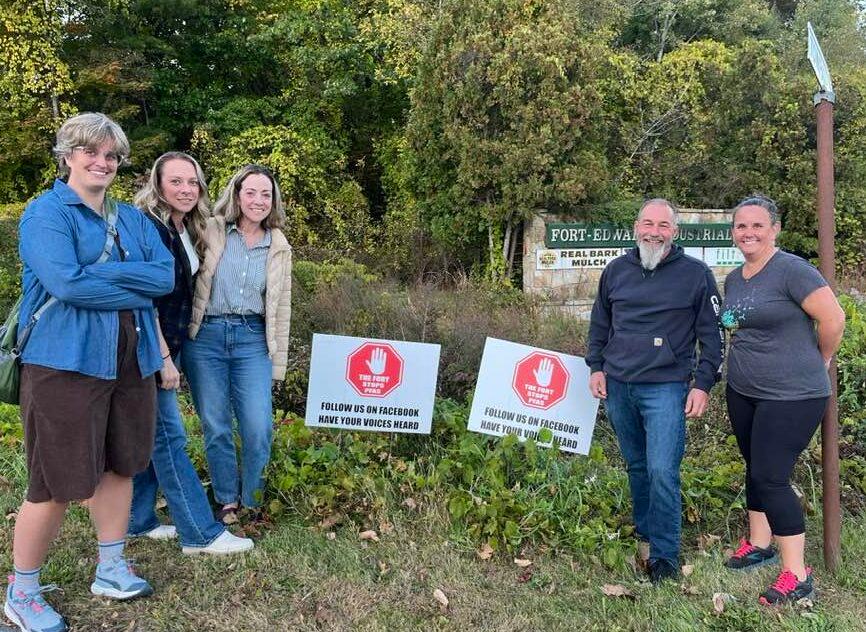
Over the past year, they have also become leaders in a grassroots group called The Fort Stops PFAS, which they helped form in 2024 to oppose a proposal from Clean Earth. The company is seeking permission from the New York State Department of Environmental Conservation (DEC) to treat 5,000 tons of PFAS-contaminated soil at its Fort Edward facility using thermal desorption—essentially heating large quantities of toxic soil to temperatures of 600 degrees or higher to unstick the contaminants. The proposal calls for a pilot, estimated to take about two weeks, to assess the effectiveness of Clean Earth’s soil treatment process and air pollution controls.
Some upstate New York towns have been hard-hit by PFAS pollution. Fort Edward isn’t one of them, but the issue is hardly a remote concern. The community is just 33 miles north of Hoosick Falls, New York, where in 2014 the revelation that the municipal water supply was contaminated by PFAS propelled concerns about forever chemicals into the national spotlight.
PFAS, or per- and polyfluoroalkyl substances, are synthetic chemicals that break down very slowly and linger in the environment for hundreds, even thousands, of years. They are found in a variety of everyday items, such as nonstick cookware and stain-resistant carpet, and have been linked to numerous health ailments, including kidney, breast and testicular cancer. Often referred to as “forever chemicals,” PFAS accumulate in our bodies over time. They are so widespread that nearly every person alive has PFAS in their blood.
Some say the possible downsides of Clean Earth’s project are too great for the community to bear. They worry that treating PFAS-polluted soil from throughout the Northeast in Fort Edward will produce emissions that contaminate their air, water and soil.
“It’s too dangerous,” says Angela Presley, 37, a member of The Fort Stops PFAS. “Treat PFAS where it is—don’t bring it to our town, please.”
Clean Earth says its thermal desorption process won’t have any adverse effects on the community. “There will be no discernible air, water (beyond water vapor) or solids emissions,” the company says in materials explaining its proposal. Nor will the project result in additional noise, odor, light, or an increase in the annual number of trucks received at the Fort Edward facility, the company says.
In an email, Karen Tognarelli, a spokeswoman for Clean Earth, says Clean Earth is asking for a permit to conduct a short-term project. Future projects to potentially treat PFAS-contaminated soils, she says, would require additional review and permitting. “If issued, the permit does not give us permission beyond that short scope and time frame,” adding that “the data generated will help New York as it struggles to find safe and economical options to fix its PFAS problems.”
Clean Earth’s new owners may be part of an industry looking to capitalize on those very problems. At the time Clean Earth opened its Fort Edward facility in 1995, it was owned by ESMI, a private company. In 2018, ESMI was acquired by the Pennsylvania-based Clean Earth, one of the largest specialty waste companies in the United States. Clean Earth is a division of the Enviri Corporation; in November, Enviri announced it would sell Clean Earth to Veolia, a multinational French company specializing in waste and water treatment—the very points where PFAS concentrates as a toxic byproduct, whether in sewage sludge or landfill leachate.
Clean Earth has remediated soils contaminated with gasoline, fuel oils, kerosene, petroleum solvents, polychlorinated biphenyls (PCBs) and more at its facility in the Fort Edward Industrial Park. This work hasn’t been controversial. Indeed, many of the PCBs came from company’s own backyard.
We’re tired of being casualties of profits for these companies, and that’s essentially what these small towns become—a casualty in the wake of a large corporation coming in.
For decades, General Electric capacitor factories in Fort Edward and Hudson Falls discharged PCBs into the upper Hudson River, which flows through both communities. In 2009, the company undertook a six-year $1.7 billion dredging project, removing more than 300,000 pounds of the highly toxic chemicals from a 40-mile stretch of the waterway. It was a massive undertaking, but state agencies and environmental groups say the cleanup ended prematurely and was a failure.
In 2014, GE moved its operations to Florida and closed its factories for good. The scars remain, from jobs lost to the factory’s toxic remnants. Today, local advocates say PCB concentrations in fish and sediment remain far too high, and have urged the Environmental Protection Agency (EPA) to make GE do more.
Analysis of blood samples from residents of Fort Edward and Hudson Falls found elevated PCB concentrations. He’s also conducted a series of studies looking at the health effects of PCBs on people living along the Hudson River, including in Fort Edward and Hudson Falls. That research found elevated rates for a number of chronic diseases and medical problems, including diabetes, thyroid disease, hypertension, low birth weight and stroke.
Many of the Fort Edward and Hudson Falls residents Carpenter interviewed “couldn’t sell their homes,” he says. “Their home values were way down because of the local contamination, and a lot of these people were not wealthy. They couldn’t afford to move to someplace that was less contaminated.”
Late last year, another obstacle to Clean Earth’s proposal emerged: In December, the village of Fort Edward’s Department of Code Enforcement informed the company that it is only permitted to clean soil contaminated with fuel oil and petroleum at its facility and that the PFAS project requires additional zoning approval. Clean Earth has submitted an appeal, which will be heard by the Zoning Board of Appeals on March 19.
In a letter to the appeals board, Clean Earth argues that its original application to construct a soil recycling plant mentioned petroleum-contaminated soil but was “in no way limited to approval for PCS only,” and that “at no point” during the facility’s history “did any Village official indicate that the Facility’s processing of other non-hazardous contaminated soils was unauthorized or that additional zoning approvals were required.”
“What changed in 2025 was not the Facility’s operations but the political environment,” with “certain environmental activist groups” pressuring village officials about the PFAS project.
In other small and rural places harmed by PFAS, such as Hoosick Falls about 35 miles south of Fort Edward, the problem often comes to light when residents discover they’re drinking polluted water, and testing finds high levels of PFAS in their blood. In these situations, the typical response is to distribute bottled water to residents, install point-of-entry treatment systems at people’s homes and find new, clean sources of water.
Removing PFAS from contaminated water is achievable, though expensive and technically challenging. What’s harder, if not impossible, is getting rid of the chemicals. The tough carbon-fluorine bonds found in PFAS—among the strongest known in chemistry—make them nearly indestructible.
When PFAS are removed from drinking water, they might be concentrated in granular activated carbon or resins that require disposal, risking their reintroduction into the environment, Aicher says. Another source of forever chemicals is landfill leachate, because many consumer goods containing PFAS end up in landfills. “Removing PFAS from drinking water doesn’t address PFAS as a contaminant and human health risk,” she says.
Clean Earth’s pilot project would test for over 50 different kinds of PFAS in the soil. A third-party laboratory would test for two types of PFAS in the air—PFOA and PFOS—and any harmful byproducts that may form from the thermal treatment process, such as volatile fluorinated compounds. Clean Earth will also test the air for potential hazardous emissions. The company has said these “will be low.” Treated soil that meets New York’s “beneficial use” criteria is no longer considered a regulated waste and can be sold and reused. In the draft permit, the DEC says that treated soils from the PFAS project can only be reused under a case-specific beneficial use determination.
At a public information meeting in late 2024, Clean Earth acknowledged that some residual PFAS contamination remained in the soil after the initial treatment in 2018, but it said those residual concentrations would still meet current DEC soil reuse criteria for residential fill.
For members of The Fort Stops PFAS, Clean Earth’s earlier PFAS test has only fueled worries about the company’s capabilities.
“They treated the soil using what is going to be their proposed method, and the first time they treated it, they were not able to successfully remove the PFAS to their goal amount, and so they had to retreat it,” says Presley, who works in the medical technology field.
Presley’s home is less than a mile from Clean Earth; the Fort Edward Industrial Park borders her property. She and her husband purchased their home, nestled on five wooded acres, about 2.5 years ago, gutted it and fixed it up. “We put lots of effort, lots of investment into a place we loved to be our forever home, if it wasn’t under the cloud of potential contamination,” Presley says. If The Fort Stops PFAS fails in its effort to stop Clean Earth’s project, “we may move,” she says. “Which is a shame, after putting all that work in.”

Sara Foss is a freelance journalist with experience writing for newspapers and other publications including the Adirondack Explorer and New York State School Boards Association. She lives in Albany with her husband, son and two cats and enjoys hiking, swimming and exploring the outdoors.